
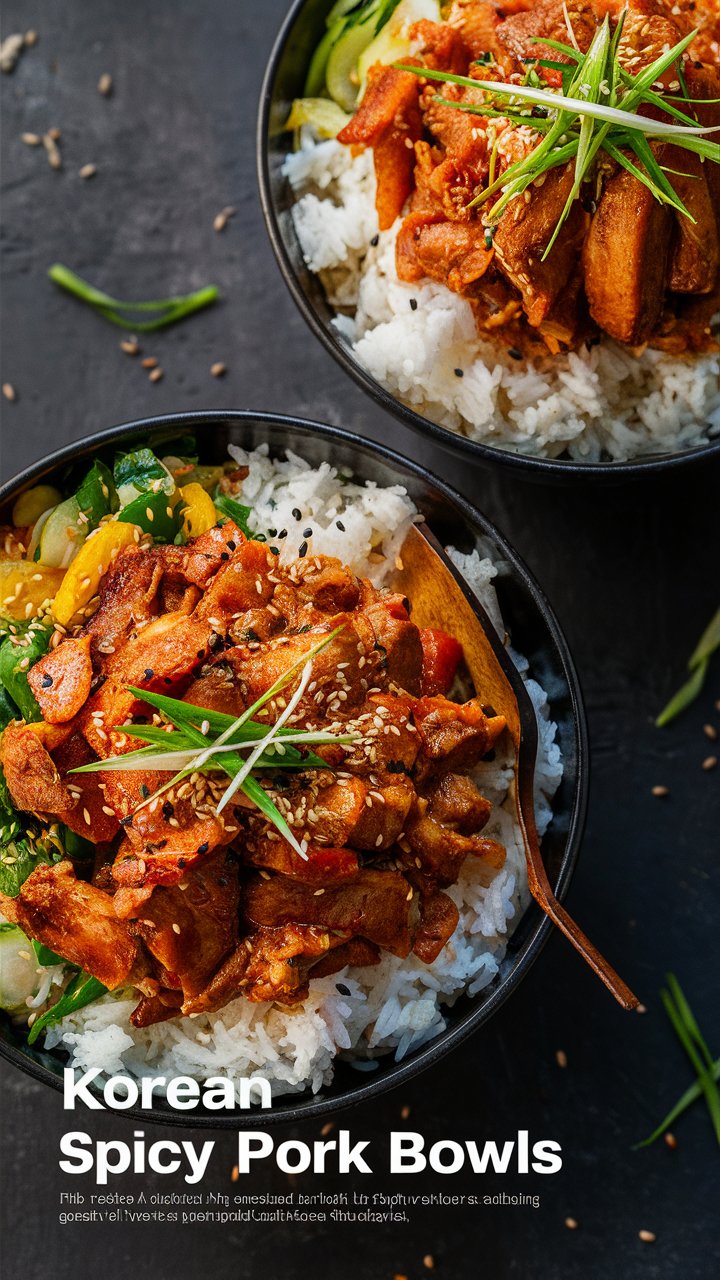
Imagine this: tender, juicy pork sizzling in a hot pan, the air filled with the rich aroma of garlic, ginger, and gochujang—the famous Korean chili paste. A gentle sweetness from brown sugar mingles with a smoky heat that makes your taste buds dance. Add in freshly sautéed vegetables, fluffy rice, and a drizzle of sesame oil, and you’ve got a bowl that’s pure magic.
That’s exactly what Korean Spicy Pork Bowls deliver—a comforting yet thrilling balance of flavors that’s easy to make, beautiful to serve, and unforgettable to taste.
This recipe brings the vibrant heart of Korean street food right to your kitchen. It’s not just about spice; it’s about harmony. Each ingredient plays its part—sweet, savory, spicy, and nutty—creating a dish that satisfies every craving in one spoonful.
Whether you’re cooking for family, entertaining friends, or just craving something extraordinary after a long day, this recipe will give you the warmth and excitement of Korean flavors without needing fancy ingredients or hours in the kitchen.
The Story Behind Korean Spicy Pork Bowls
Every great dish has a story, and this one is inspired by a memory that stays with me even today.
I remember my first trip to Seoul—standing in a lively street market as the scent of grilled meat, chili paste, and sesame filled the air. The sound of sizzling woks mixed with laughter and the chatter of locals. I tried a simple rice bowl topped with spicy pork and pickled radish—and it was love at first bite.
Since then, I’ve recreated that magic in my own kitchen many times. Over the years, I’ve refined this recipe into something easy, wholesome, and perfect for any home cook. The beauty of Korean Spicy Pork Bowls is that you can personalize them—spice it up or tone it down, serve it over rice or noodles, add vegetables you love—it’s a dish that always works.
Why You’ll Love This Recipe
There are hundreds of dinner ideas online, but here’s why this one stands out:
- Quick and Easy: From prep to plate in under 35 minutes. Perfect for busy weeknights.
- Restaurant-Level Flavor: The marinade captures authentic Korean depth—spicy, slightly sweet, rich, and full of umami.
- Customizable: Works with chicken, beef, or tofu if you prefer. You can swap veggies based on what’s fresh.
- Healthy and Balanced: Packed with protein, colorful vegetables, and wholesome rice or quinoa.
- Visually Stunning: The glossy red sauce, green onions, and sesame seeds make it a feast for the eyes.
- Meal Prep Friendly: Keeps beautifully for days and reheats without losing its flavor.
Ingredients You’ll Need
Before we get into the cooking steps, here’s everything you’ll need to make this irresistible bowl.
For the Pork Marinade
- 1 lb (450g) boneless pork shoulder or pork tenderloin, thinly sliced
- 3 tablespoons gochujang (Korean chili paste) – the heart of this dish
- 3 tablespoons low-sodium soy sauce – adds depth and balance
- 2 tablespoons brown sugar – softens the spice and caramelizes the pork
- 1 tablespoon rice vinegar – brightens the flavor
- 1 teaspoon sesame oil – nutty finish that rounds out the sauce
- 4 cloves garlic, minced – for that aromatic base
- 1 inch fresh ginger, minced – gives warmth and zing
- ½ teaspoon black pepper – enhances every note
For the Bowl
- 2 cups cooked rice (white, jasmine, or short-grain Korean rice)
- 1 cup bell peppers, sliced – red, yellow, or green for color contrast
- 1 cup shredded carrots
- 1 cup steamed broccoli or bok choy
- 1 tablespoon cooking oil
- 1 tablespoon sesame seeds (toasted)
- 2 green onions, finely chopped
Optional toppings: a soft-fried egg, cucumber slices, or kimchi for that extra Korean flair.
How to Make Korean Spicy Pork Bowls
This dish may look restaurant-quality, but it’s wonderfully simple to make. Here’s the step-by-step guide.
Step 1: Marinate the Pork
In a mixing bowl, combine gochujang, soy sauce, brown sugar, sesame oil, rice vinegar, minced garlic, and ginger. Add your thinly sliced pork and toss until fully coated. Cover and refrigerate for at least 20 minutes—or overnight if you have time.
🧡 Pro Tip: Marinating longer allows the flavors to fully penetrate the meat, making it tender and flavorful.
Step 2: Prepare Your Vegetables
While the pork marinates, chop your vegetables into even, bite-sized pieces. Having your veggies ready ensures a smooth stir-fry process.
You can use classic options like bell peppers, broccoli, and carrots—or get creative with zucchini, mushrooms, or snap peas.
Step 3: Cook the Pork
Heat 1 tablespoon of cooking oil in a large non-stick skillet or wok over medium-high heat.
Add the marinated pork in a single layer (don’t overcrowd the pan). Let it sear for about 2 minutes before stirring.
Cook for 5–7 minutes, stirring occasionally, until the pork is cooked through and slightly caramelized. You’ll notice the sauce thickening and coating the meat beautifully.
🔥 Pro Tip: Avoid overcooking—thin pork slices cook quickly. The goal is juicy, not dry.
Step 4: Stir-Fry the Vegetables
Once the pork is done, remove it from the pan and set aside.
In the same pan, add a touch more oil if needed and toss in your vegetables. Stir-fry for 3–5 minutes until tender but still crisp.
The key is to maintain a little crunch—it balances perfectly with the saucy pork.
Step 5: Assemble Your Bowl
Now the fun part!
In individual serving bowls, start with a layer of fluffy rice. Add your stir-fried vegetables to one side and your spicy pork to the other. Sprinkle toasted sesame seeds and chopped green onions on top.
Drizzle any remaining sauce from the pan over the pork for that glossy finish.
Optional: Add a fried egg or kimchi for authenticity.
Perfecting the Cooking Process
Great food comes from great technique. Here’s how to make sure your Korean Spicy Pork Bowls turn out perfect every time.
- Slice the Pork Thinly: This ensures it cooks quickly and absorbs the marinade evenly.
- Preheat Your Pan Well: High heat helps sear the meat and lock in the juices.
- Balance the Sauce: Adjust gochujang and sugar levels to suit your spice tolerance.
- Don’t Skip the Sesame Oil: It’s what gives Korean food its signature aroma.
Add Your Personal Touch
What makes this dish truly special is how adaptable it is. You can make it your own in endless ways.
Protein Variations
- Chicken: A lighter option that cooks even faster.
- Beef: Adds richness and depth.
- Tofu or Tempeh: For a plant-based version that’s equally satisfying.
Grain Alternatives
- White rice, brown rice, jasmine rice, quinoa, or even noodles.
Flavor Enhancers
- A spoonful of kimchi, pickled radish, or cucumber salad on the side complements the spice perfectly.
Chef’s Helpful Tips
- Marinate Overnight: For the deepest flavor, let the pork rest in the fridge overnight.
- Don’t Crowd the Pan: Overcrowding leads to steaming, not searing.
- Use Fresh Ginger: It adds a bright, natural spice that powdered ginger can’t match.
- Toast Your Sesame Seeds: It enhances the nutty aroma and adds a satisfying crunch.
- Meal Prep Magic: Divide portions into containers and refrigerate for up to 3 days.
Storing and Reheating
Store leftovers in an airtight container in the refrigerator for up to 3 days.
To reheat:
- Warm in a skillet over low heat with a splash of water or broth.
- Avoid microwaving for too long—it can dry out the pork.
Freezing tip: The marinated uncooked pork freezes well for up to a month. Just thaw overnight before cooking.
Health and Nutrition
Each serving of Korean Spicy Pork Bowls provides approximately:
- Calories: 480–500
- Protein: 35g
- Carbohydrates: 40g
- Fat: 20g
- Sodium: 600mg
This balance of lean protein, healthy carbs, and fresh vegetables makes it both nourishing and satisfying. It’s a great option for meal prep, fitness goals, or simply enjoying a flavorful meal without guilt.
FAQs
1. Can I make this recipe less spicy?
Absolutely. Just reduce the amount of gochujang or balance the heat with a bit more brown sugar or honey.
2. Is there a vegetarian version?
Yes! Substitute pork with tofu or mushrooms. Marinate and cook the same way for amazing flavor.
3. Can I use store-bought gochujang?
Definitely. Most Asian grocery stores or international aisles carry authentic Korean gochujang. Choose a brand that lists chili, rice, and soy as main ingredients.
4. What sides go well with this?
Try it with steamed rice, kimchi, miso soup, or a light cucumber salad.
5. Can I prepare it ahead of time?
Yes, the pork can be marinated up to 24 hours before cooking. The cooked dish reheats beautifully for meal prep.
Serving Suggestions
- Add a fried egg on top for a Korean bibimbap-inspired version.
- Serve with lettuce leaves for a fun Korean BBQ-style wrap.
- Pair with chilled green tea or barley tea to balance the spice.
The Essence of Korean Flavors
Korean cuisine celebrates the perfect harmony of five tastes—sweet, sour, salty, bitter, and spicy. In this dish, gochujang provides spice and umami, soy sauce adds saltiness, brown sugar brings sweetness, and sesame oil ties everything together with a hint of bitterness and richness.
That’s why Korean Spicy Pork Bowls are so satisfying—you experience every taste in one bite.
Tips for Perfect Presentation
Food is as much about the eyes as it is about taste.
- Use a wide, shallow bowl so the ingredients are visible.
- Garnish with sesame seeds and bright green onions.
- Serve with chopsticks or a spoon for authenticity.
- For a modern touch, drizzle with a thin line of gochujang mayo.
Korean Spicy Pork vs. Chicken Bowls
If you’re wondering whether pork or chicken is better, here’s a quick comparison:
| Feature | Pork | Chicken |
|---|---|---|
| Flavor | Rich, juicy, deeply savory | Light, mild, versatile |
| Texture | Tender with caramelized edges | Soft and slightly chewy |
| Cooking Time | Slightly longer | Quick |
| Best For | Traditional Korean taste | Healthier or lighter meals |
Both versions taste fantastic, so choose what fits your mood.
Cultural Touchpoint: What Makes It Korean?
This recipe takes inspiration from “Dwaeji Bulgogi”, a traditional Korean dish made with marinated pork grilled over open flames. The key is gochujang—a fermented chili paste that provides not just heat, but depth and sweetness from rice and soy.
This modern bowl version adapts those authentic flavors for everyday home cooking while keeping the heart of Korean cuisine intact—balance, warmth, and comfort.
Common Mistakes to Avoid
- Using too much gochujang – it can overpower other flavors.
- Skipping marination – this step develops depth and tenderness.
- Cooking on low heat – you’ll lose that caramelized texture.
- Using un-toasted sesame seeds – you miss that beautiful aroma.
Conclusion: A Bowl Full of Happiness
Korean Spicy Pork Bowls aren’t just food—they’re an experience. Every bite tells a story of comfort, spice, and love. It’s that perfect middle ground between fiery street food and cozy home cooking.
You don’t need special tools or rare ingredients—just a willingness to try something new and a love for bold flavor.
Next time you’re wondering what to make for dinner, skip the takeout menu. Instead, whip up this Irresistible Korean Spicy Pork Bowl, sit back, and enjoy a flavor explosion that feels like a warm hug from Korea itself.


